High Ground Advantages: Altitude's Role in Shaping Endurance Stats Across Football Pitches, Tennis Arenas, and Racing Tracks
Written by Tina Patterson · Aug 3, 2026
High Ground Advantages: Altitude's Role in Shaping Endurance Stats Across Football Pitches, Tennis Arenas, and Racing Tracks
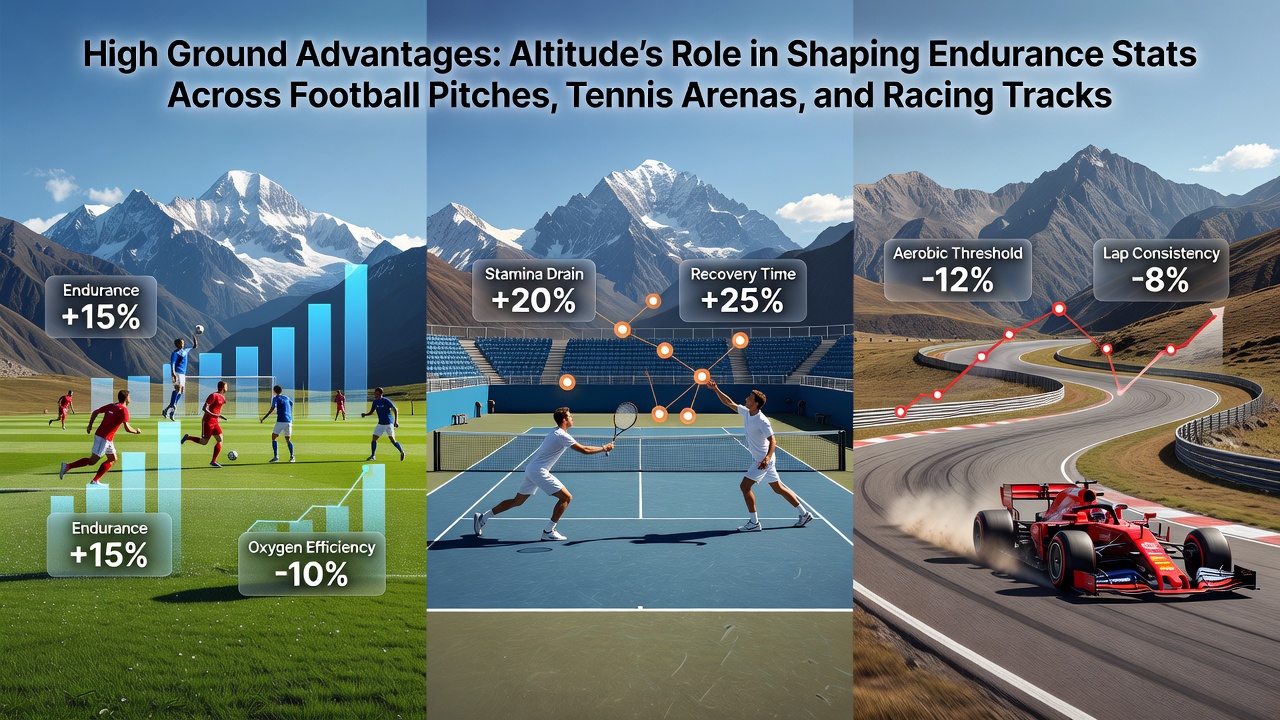
Altitude alters how athletes sustain effort because lower oxygen levels force physiological adjustments that show up clearly in endurance measurements, and researchers track these shifts through heart rate data, recovery times, and performance logs collected at venues above 1,500 meters. Studies conducted by the Australian Institute of Sport reveal that players at such elevations increase red blood cell production within weeks, which in turn supports prolonged running distances during matches even as initial fatigue sets in faster than at sea level. Observers note that these adaptations create measurable edges for teams acclimatized to high-ground conditions, while visiting sides often record lower total distances covered in the second halves of games.
Football Pitches at Elevation
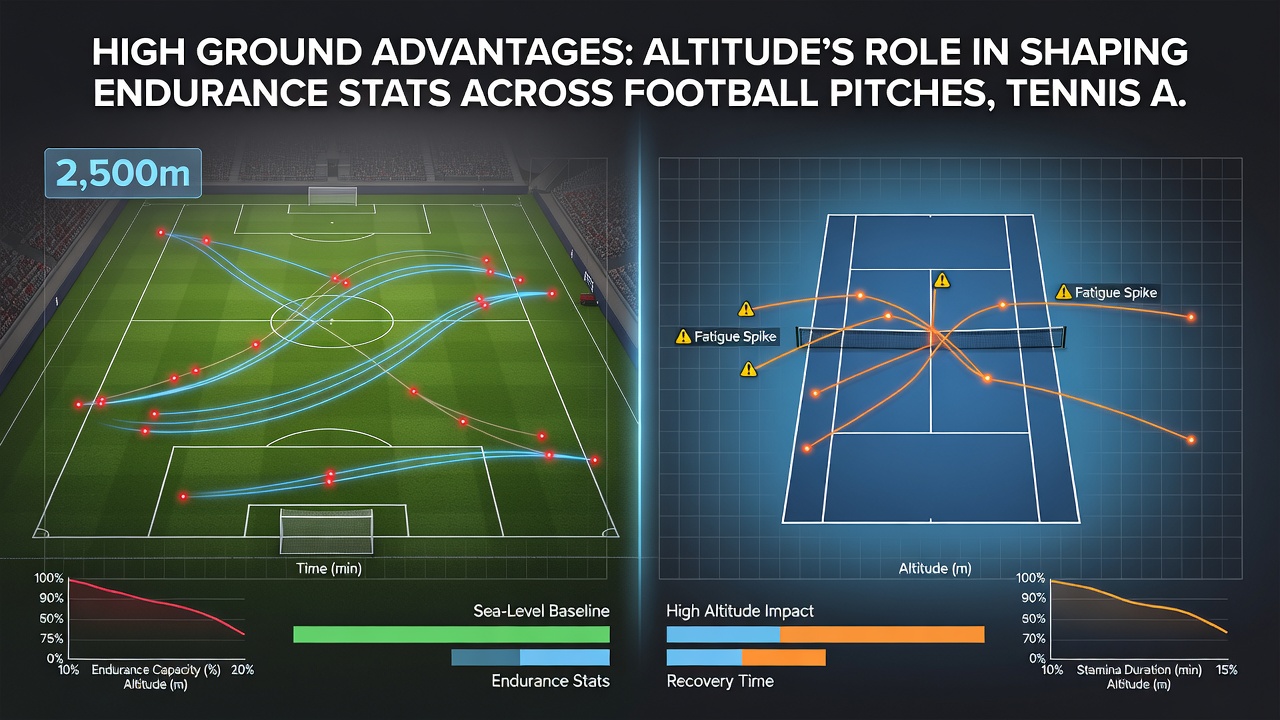
Football matches played on pitches in cities like La Paz or Quito demonstrate consistent patterns where home teams maintain higher average speeds across full 90-minute periods, according to GPS tracking systems deployed by South American leagues. Data from the Confederación Sudamericana de Fútbol shows that visiting players experience a 15 to 20 percent drop in high-intensity sprints after the 60-minute mark when matches occur above 2,500 meters, whereas locals sustain output closer to baseline figures thanks to prior exposure. And the pattern repeats across multiple seasons, with statisticians compiling results from dozens of fixtures to confirm that altitude correlates directly with reduced recovery between bursts of play.
Tennis Arenas and Rally Endurance
Tennis events held at elevated sites such as the Bogota tournament or certain North American hard-court stops provide another clear window into these effects because matches extend through long rallies that test sustained cardiovascular output. Research published by the University of Colorado Boulder indicates that serve speeds remain relatively stable at altitude while rally lengths shorten on average because players tire more quickly during extended exchanges, leading to shifts in point construction that favor aggressive baseline approaches over defensive retrieval. Figures from the International Tennis Federation archives highlight how competitors who train at similar elevations beforehand post higher win percentages in three-set matches, with endurance metrics such as distance covered per set showing gains of up to 12 percent compared with non-acclimatized opponents.
Racing Tracks and Stamina Metrics
Horse racing tracks situated at higher elevations, including venues in the American West and parts of Australia, produce records where finishing times lengthen for distance events yet certain animals exhibit stronger late-race surges once they adapt to thinner air. Data compiled by Racing Australia over multiple years demonstrates that horses racing above 1,800 meters post lower average speeds in the opening furlongs but close gaps more effectively in the final stages when compared with performances at lower tracks, a trend that emerges from thousands of race charts. Those who've analyzed these patterns point to increased oxygen-carrying capacity in blood as the key driver, with trainers adjusting conditioning programs accordingly to target events scheduled during peak summer months.
Preparation for events planned around August 2026 includes targeted altitude camps for squads across these sports because governing bodies recognize the statistical impact on endurance outcomes. The Canadian Sport Institute has released guidelines that outline staged exposure protocols lasting 14 to 21 days, during which athletes monitor lactate thresholds and report measurable improvements in time-to-exhaustion tests. Similar approaches appear in equine programs, where bloodwork collected before and after training blocks confirms elevated hemoglobin levels that translate into stronger performances on race day.
Comparative Data Across Disciplines
Cross-sport comparisons become possible when analysts align datasets from football GPS units, tennis match logs, and racing sectional times, revealing that the percentage drop in endurance capacity follows a roughly linear relationship with altitude gain once above 1,500 meters. A report issued by the World Anti-Doping Agency notes that these physiological responses remain consistent whether the subject is a midfielder covering 10 kilometers, a tennis player completing 300 meters of court movement per set, or a thoroughbred sustaining gallop for 2,000 meters. What's interesting is how recovery windows narrow at elevation, forcing coaches and conditioners to recalibrate training loads and match strategies based on location-specific statistics rather than generic templates.
Conclusion
Altitude continues to shape endurance statistics in predictable ways across football, tennis, and racing because the underlying oxygen dynamics affect every athlete and animal that competes at height. Organizations ranging from the Australian Institute of Sport to the University of Colorado Boulder supply the measurements that confirm these effects, and ongoing data collection ensures that future schedules account for the documented advantages held by those who prepare accordingly. The patterns hold steady through repeated observation, giving clear parameters for anyone evaluating performance at different elevations.