Timezone Disruptions: Mapping Circadian Effects from Racing Circuits to Tennis Arenas and Football Pitches in Multi-Sport Forecast Chains
Written by Drew Müller · Jun 1, 2026
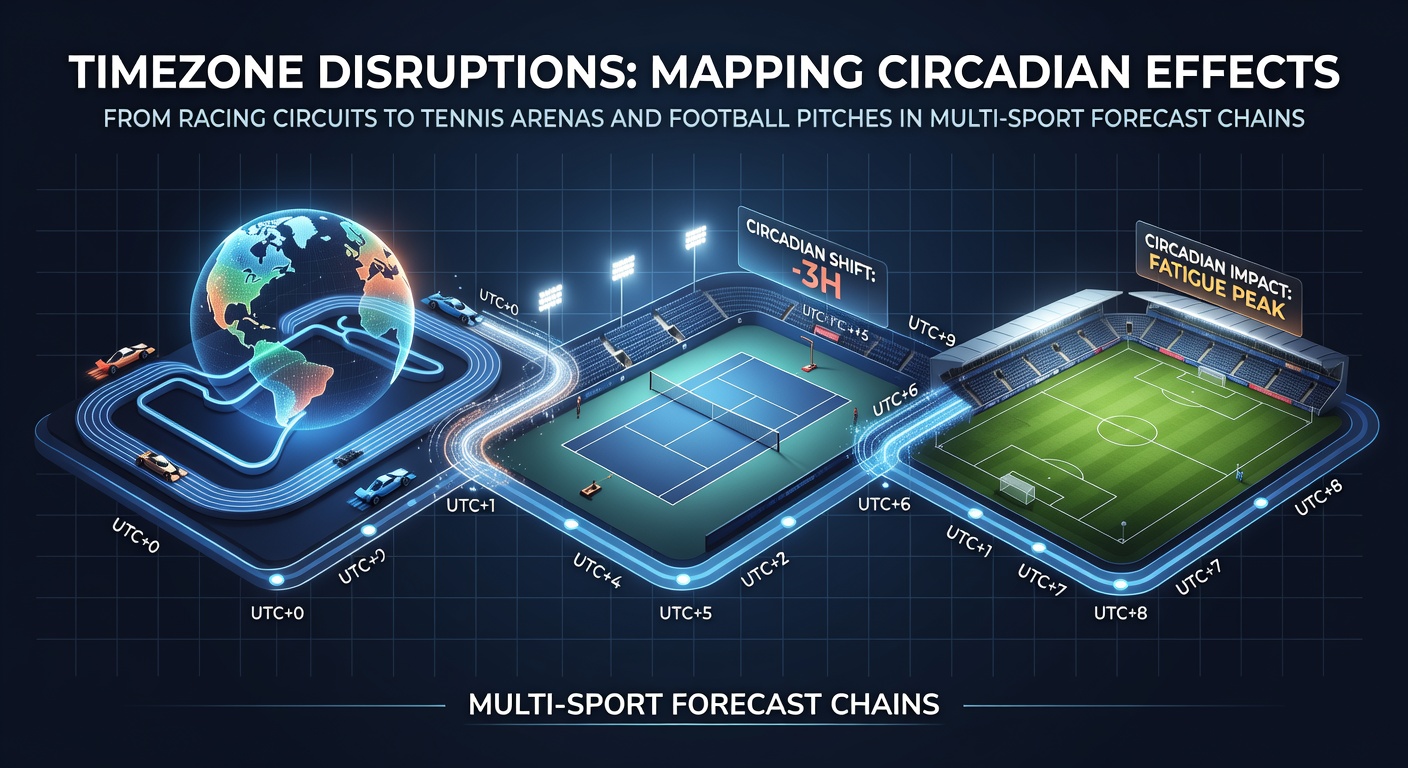
Timezone Disruptions: Mapping Circadian Effects from Racing Circuits to Tennis Arenas and Football Pitches in Multi-Sport Forecast Chains
Travel across multiple time zones creates measurable shifts in circadian rhythms that affect physical output, reaction times, and recovery patterns in athletes competing in horse racing, tennis, and football. These disruptions arise when internal body clocks, which regulate hormone release, core temperature, and alertness cycles, fail to align immediately with local time after eastward or westward flights. Researchers tracking elite competitors have documented performance variations that extend across consecutive days, and analysts incorporate such patterns when constructing multi-sport forecast models that link selections from different disciplines.
Impacts Observed in Horse Racing Circuits
Jockeys and equine athletes frequently cross several time zones during international meetings, and studies record changes in stride efficiency alongside altered cortisol profiles following long-haul journeys. Data collected at events spanning Asia, Europe, and North America show that horses arriving from regions eight or more hours ahead of local time often exhibit delayed peak performance windows, with morning training sessions revealing slower recovery between gallops compared to acclimatized rivals. Observers note that stewards and trainers adjust preparation schedules by advancing or delaying feed times and exercise blocks to ease this transition, while forecasters monitoring accumulator chains factor historical travel logs into probability calculations for races scheduled shortly after arrival.
Tennis Arenas and Player Adaptation Patterns
Professional tennis circuits span continents within single weeks, placing athletes under repeated circadian stress during tournaments such as those held in Australia, the United States, and Europe. Performance metrics gathered by sports science teams indicate reduced serve accuracy and extended rally durations in the first 48 hours after transmeridian flights, particularly when matches occur during an individual's biological night. Figures released by the International Tennis Federation reveal that players traveling eastward experience sharper dips in evening session results, prompting schedulers to place affected competitors in earlier draws where possible. Those building layered prediction chains across sports integrate these timing variables because tennis outcomes feed into combined selections that also draw from racing and football fixtures occurring within similar calendar windows.
Football Pitches and Team Travel Data
Club and national football squads routinely navigate time zone changes during league campaigns and international windows, with physiological monitoring showing elevated fatigue markers after flights exceeding five hours. Research published through university sports laboratories in Australia and Canada demonstrates that midfield coverage distances drop by measurable percentages in the opening half when teams play within 24 hours of arrival, although some squads mitigate effects through pre-travel light exposure protocols. Match reports from June 2026 tournaments highlight how clubs arriving from distant confederations schedule recovery sessions timed to destination daylight, and analysts tracking accumulator forecasts adjust expected goal and possession models accordingly when fixtures overlap with tennis and racing events.
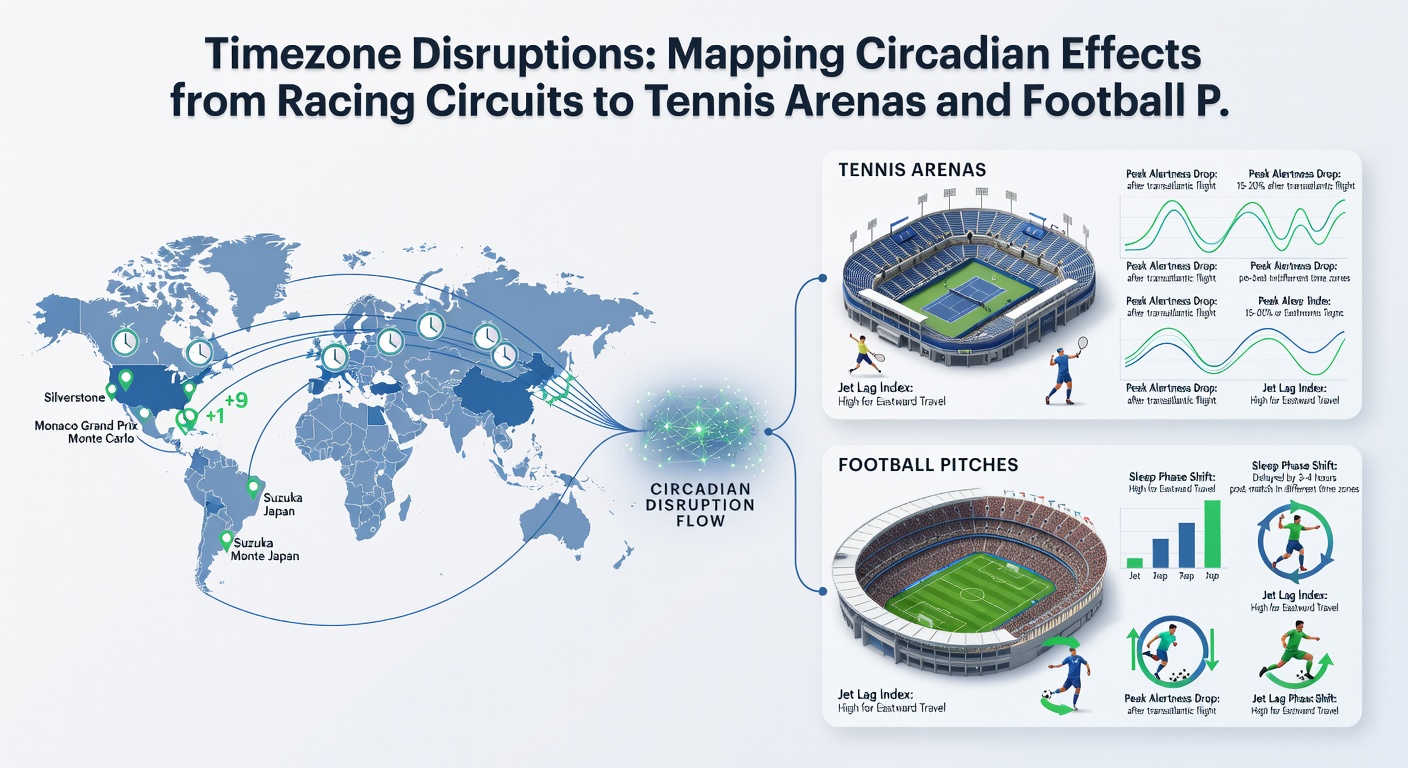
Integration into Multi-Sport Forecast Models
Forecast chains that combine selections from horse racing, tennis, and football require synchronization of circadian variables because travel effects rarely occur in isolation. A single week's schedule might feature a Melbourne Cup contender flying from Europe, a tennis player moving from Tokyo to Paris, and a football side crossing the Atlantic, each carrying distinct recovery timelines. According to reports from the Australian Institute of Sport, incorporating sleep-wake data and historical performance deltas improves the calibration of probability estimates used in such layered selections. Analysts therefore cross-reference flight manifests, venue latitudes, and fixture start times to refine expected outputs, noting that eastward travel generally produces longer adaptation periods than westward movement.
Regulatory bodies and academic consortia across North America and the European Union continue to publish aggregated datasets on these patterns, enabling forecasters to update models before major multi-sport betting periods. What's interesting is that the same circadian datasets also support medical staff in designing individualized jet-lag countermeasures for athletes, creating feedback loops that feed back into performance projections. Those constructing daily chains therefore treat timezone offsets as quantifiable inputs rather than secondary considerations, especially when events cluster around June 2026 calendars that feature overlapping global fixtures.
Conclusion
Circadian disruptions linked to international travel produce consistent, trackable effects across horse racing, tennis, and football, and these patterns supply objective inputs for multi-sport forecast systems. Continued collection of physiological and performance data from diverse geographic sources supports refinement of models that link selections across disciplines, while ongoing research from institutions in varied regions supplies the factual foundation for such integrations.